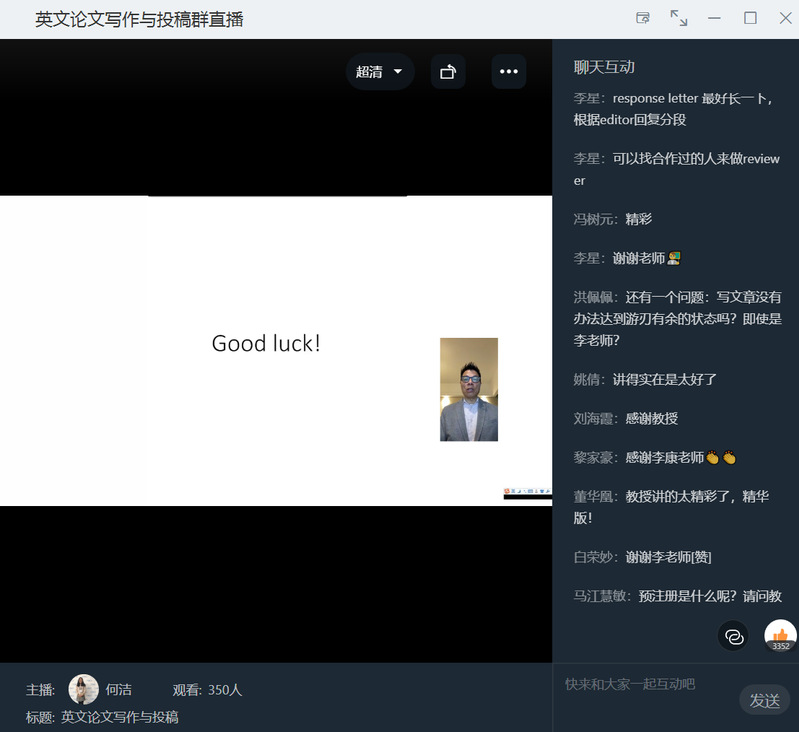

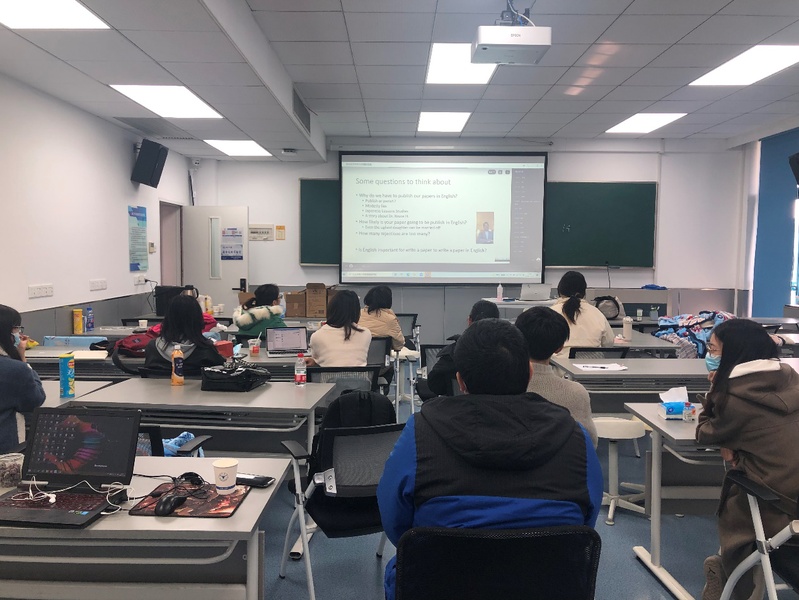
On the morning of November 26, 2021, Professor Kang Lee, a distinguished alumnus of our department, was invited to deliver a presentation titled How to Write Papers in English and Publish Them? focusing on the writing and submission of English scientific papers. Due to pandemic restrictions, the event was transitioned from an in-person sharing session to an online livestream, attracting a cumulative audience of 350 participants. This included many psychology students under quarantine on the Zijingang Campus.
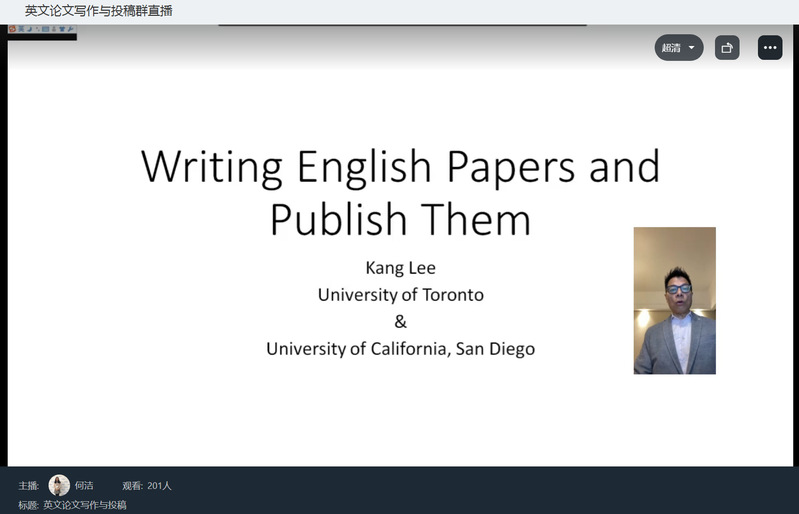
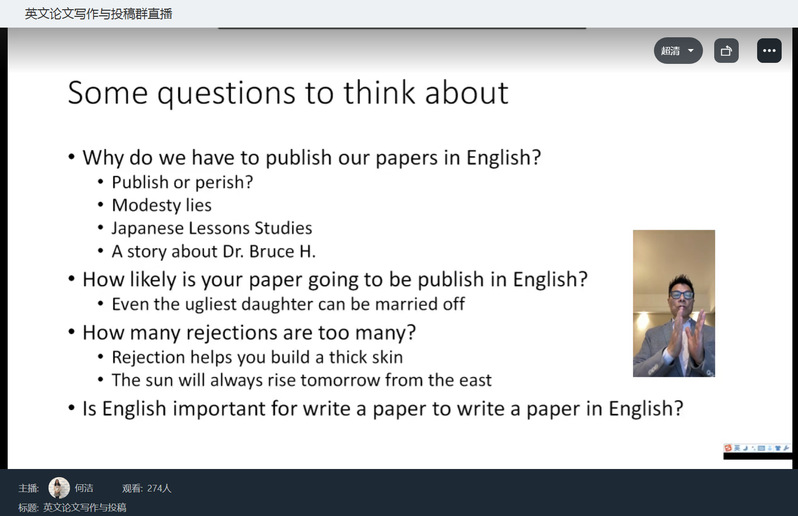
In the section on paper writing, Professor Kang Lee began by posing the question, Why should we write articles in English and publish them in English journals? to spark discussion among faculty and students. He then shared insights in a storytelling manner, emphasizing points such as peer communication, enhancing international influence, and gaining one's own voice.
Next, through heuristic questioning, Professor Kang Lee highlighted the importance of developing the ability to clearly articulate research in English writing. This requires simplifying one's thought process when writing in English, maintaining a single logical thread, and avoiding complex, philosophically intricate expressions typical of Chinese writing. How can writing be simplified? Drawing on examples and his own experience, he offered four suggestions: first, avoid using complex vocabulary; second, use the first person more often; third, write short sentences and paragraphs; and fourth, minimize the use of passive voice. When drafting, the primary focus should not be on grammatical correctness but on conveying ideas clearly.
Professor Kang Lee then detailed the key elements of each section of a paper—title, introduction, methods, results, and discussion. Titles should be concise, preferably short phrases that allow readers to understand the findings without reading the full paper. The introduction should begin with a motherhood statement, followed by addressing questions such as Why study this topic? What are the current gaps? Why fill these gaps? What is the research objective? Each subsequent paragraph should start with a clear topic sentence. He also emphasized the need for a paragraph in the introduction explaining the research methodology (including participants, materials, procedures, etc.). The final paragraph of the introduction should align with the results, sequentially presenting research hypotheses and telling a compelling story. The methods section should follow a linear structure, using a step-by-step approach (A → B → C → D). Similarly, the results section should adhere to linear writing, analyzing data in the order of the hypotheses and clearly explaining the meaning of the findings. The discussion should begin by summarizing the research purpose and key findings, followed by a discussion of each major result. After highlighting the contributions, it is essential to acknowledge the study's limitations and connect them to future research directions. The conclusion should also end with a motherhood statement. Additionally,
Professor Kang Lee stressed the importance of including figures, noting that papers without figures attract no readers.
In the section on paper submission, Professor Kang Lee generously shared key strategies, such as the importance of crafting a compelling cover letter and actively participating in the selection of action editors and reviewers. He also emphasized the necessity of academic networking, encouraging students to connect with leading scholars through conferences. Furthermore, during the review process, authors should not passively wait but can proactively inquire about the status with associate editors or journal secretaries. Upon receiving reviewer comments, it is crucial to read them carefully, make revisions accordingly, and respond to each comment point by point. Publication does not mark the end of the process; he also stressed the need to increase visibility by actively sharing research updates with peers, thereby giving the paper lasting impact.
Finally, Professor Kang Lee reminded faculty and students, drawing from his own experiences, to believe that every paper can be published. Perseverance is key, and even in the face of repeated rejections, one must maintain faith that the sun will rise tomorrow!
Faculty and students unanimously agreed that the lecture was not only easy to understand but also rich in practical insights. It not only greatly benefited their English academic writing and submission skills but also allowed them to deeply feel Professor Kang Lee's sincere dedication to the faculty and students of the Department of Psychology.