
Chen Li Young Scholars in Psychological Science Forum | Academic Lecture by Assistant Professor Eddie Chong Successfully Held
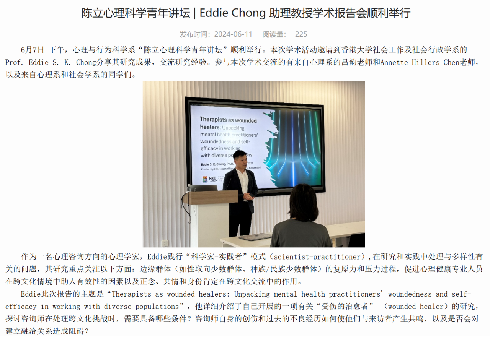
On the afternoon of June 7th, the Chen Li Young Scholars in Psychological Science Forum hosted by the Department of Psychology and Behavioral Science was successfully held. This academic event invited Prof. Eddie S. K. Chong from the Department of Social Work and Social Administration at The University of Hong Kong to share his research findings and exchange research experiences. Participants in this academic exchange included Dr. Yun Lv and Dr. Annette Hillers-Chen from the Department of Psychology, as well as students from the Department of Psychology and the Department of Sociology.
As a counseling psychologist, Prof. Chong embodies the scientist-practitioner model, addressing diversity-related issues in both research and practice. His research primarily focuses on the following areas: resilience and stress processes among marginalized groups (such as sexual orientation minorities and racial/ethnic minorities), factors enhancing the helping effectiveness of mental health professionals in cross-cultural contexts, and the roles of mindfulness, empathy, and identity affirmation in intercultural communication.
The theme of Prof. Chong's presentation was Therapists as Wounded Healers: Unpacking Mental Health Practitioners' Woundedness and Self-Efficacy in Working with Diverse Populations. He provided a detailed introduction to his research on the wounded healer paradigm, exploring the essential qualities counselors need when facing cross-cultural challenges. The talk also examined how therapists' own trauma and adverse past experiences can foster empathy with their clients, and whether these experiences might also pose obstacles to building a strong therapeutic rapport.
First, Eddie introduced the concept of diverse clientele through two counseling cases, highlighting how counselors' diversity awareness, trauma-informed awareness, and awareness of their own vicarious stress responses during sessions are crucial for effective helping.
Subsequently, focusing on the concept of the wounded healer, Eddie reviewed previous research, noting that counselors' personal experiences of suffering and healing could either facilitate or hinder the therapeutic relationship and outcomes. He proposed that vulnerability and resilience could serve as predictive indicators for such counselors. Vulnerability factors include adverse childhood experiences and socio-cultural contexts involving fear of losing face and identity stigma, while resilience factors encompass self-care, interconnectedness, and non-attachment.
What characteristics define these wounded healer counselors? What are their professional attitudes, values, and their perceived difficulties and self-efficacy in practice? Addressing these questions, Professor Eddie detailed his research process and findings. Surveying over 400 counselors in Hong Kong, the study identified three types of counselors. Compared to the shame-prone and resourceful types, the wounded healer counselors reported more childhood adversities and socio-cultural disadvantages, yet they had developed higher levels of diversity awareness and trauma-informed awareness, demonstrating greater self-efficacy in counseling contexts. These findings offer insights into the mental health and training needs of counseling practitioners.
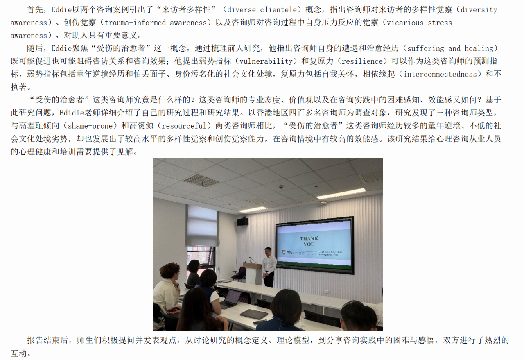
Following the presentation, faculty and students actively raised questions and shared perspectives, engaging in lively discussions ranging from conceptual definitions and theoretical models to challenges and reflections from counseling practice.