

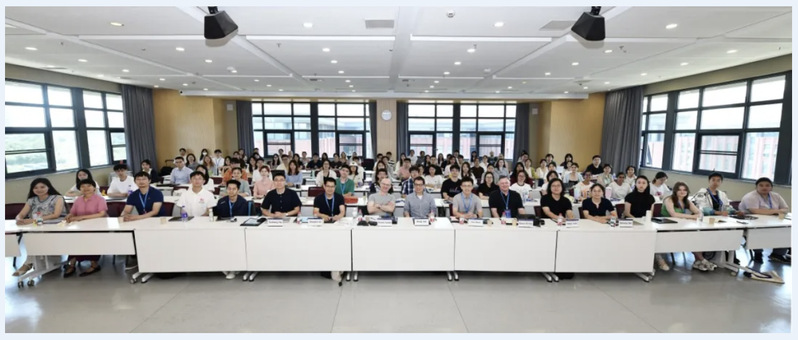
On June 27th, the Interdisciplinary Research and Health Applications of Neuroscience and Artificial Intelligence academic symposium, a sub-event of the 2025 5th China-Germany Sustainable Development Forum jointly organized by the Zhejiang University Department of Psychology and Behavioral Sciences and the University of Munich, was successfully held in Lecture Hall 537 of the Zhejiang University Department of Psychology and Behavioral Sciences.
This forum brought together renowned scholars from institutions such as the University of Munich (Germany), the University of Toronto (Canada), and McMaster University (Canada). They shared the latest scientific research achievements in fields including mental health and engaged in in-depth exchanges focusing on cutting-edge interdisciplinary research in neuroscience and artificial intelligence. The meeting was chaired by Professor Hui Chen, Deputy Head of the Zhejiang University Department of Psychology and Behavioral Sciences.
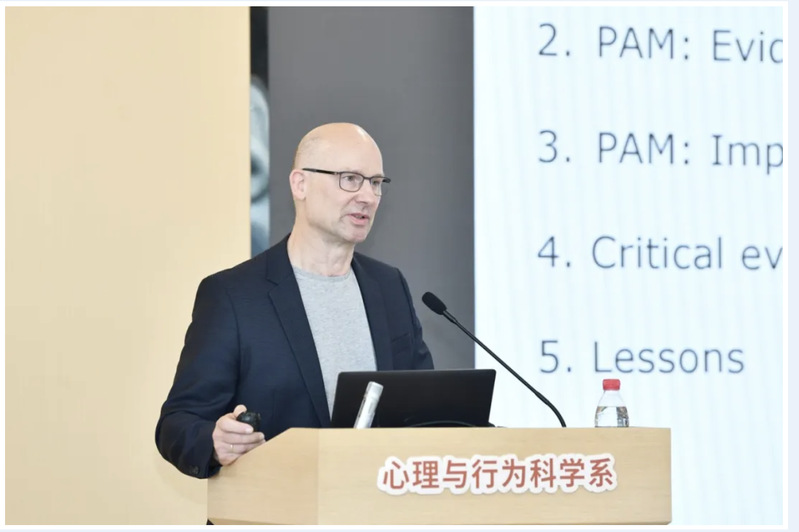
Thomas Schenk, Head of the Department of Clinical Neuropsychology at the University of Munich's Faculty of Psychology, introduced the dual-pathway separation mechanism of the perceptual and motor systems. He proposed the Perception-Action Model (PAM), emphasizing the key roles of visual information and embodied cognition in perception and action control.
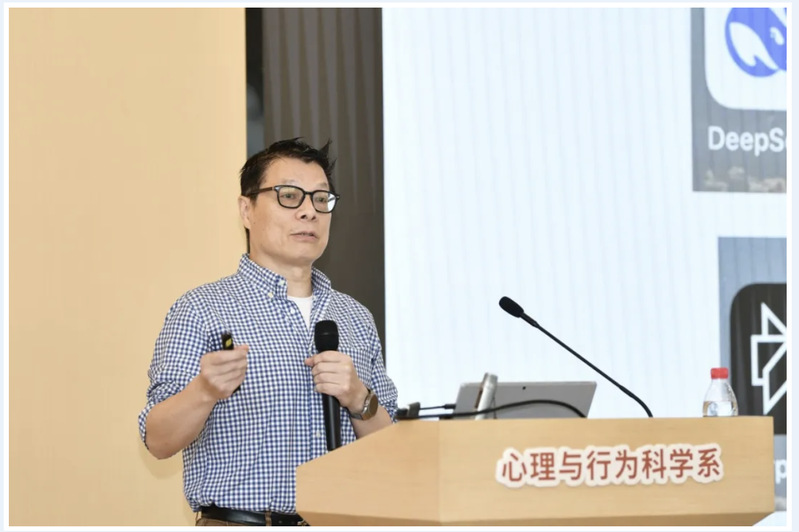
Kang Lee, Fellow of the Royal Society of Canada and Professor of Psychology at the University of Toronto, focused on the concept and current development of affective artificial intelligence. He explained the core role of psychology in empowering affective AI and its practical applications in psychological research. He also offered predictions regarding future pathways for the deep integration of psychology and affective AI.
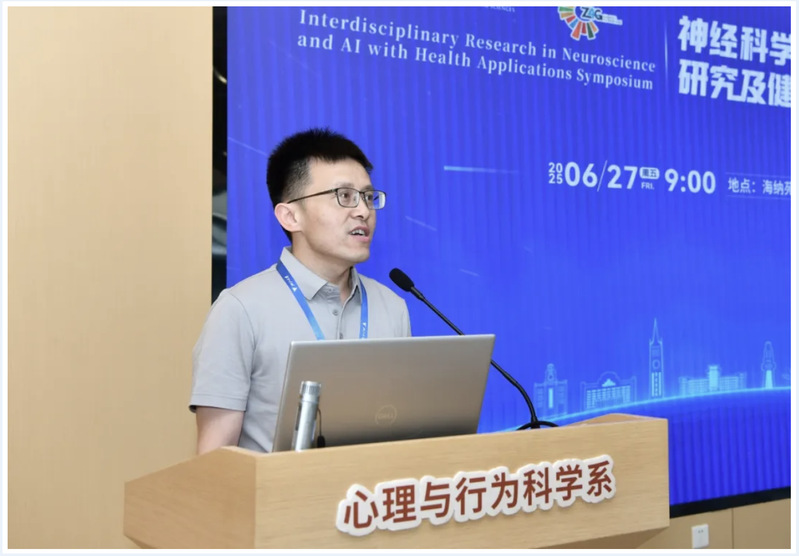
Hui Chen , Deputy Head of the Zhejiang University Department of Psychology and Behavioral Sciences and Yangtze River Scholar Distinguished Professor, delivered a report centered on the phenomenon of attribute amnesia. Starting from the interactive mechanisms of attention, working memory, and executive function, he explored the causes of this phenomenon and its manifestations in patients with schizophrenia and autism spectrum disorder. He proposed the Reselection Model of Working Memory, providing a new perspective and theoretical extension to traditional theories of attention and working memory.
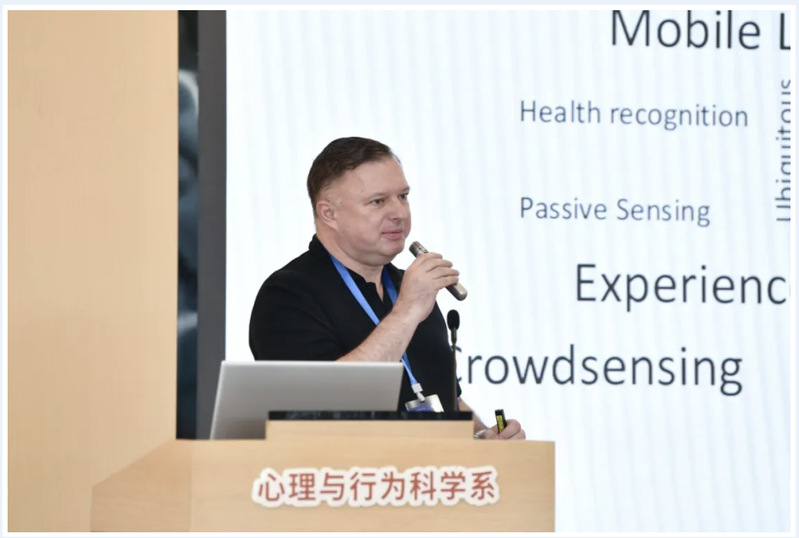
Markus Bühner, Head of the Department of Psychological Assessment at the University of Munich's Faculty of Psychology, presented research on predicting psychological traits using smartphone usage behavior. By analyzing multidimensional information such as app usage frequency, duration of use, and GPS data, it is possible to predict individuals' personality traits, fluid intelligence, and depression tendency with considerable accuracy. The prediction efficacy for several indicators was comparable to that of traditional Big Five personality inventories, demonstrating the significant potential of digital technology in the field of psychological assessment.
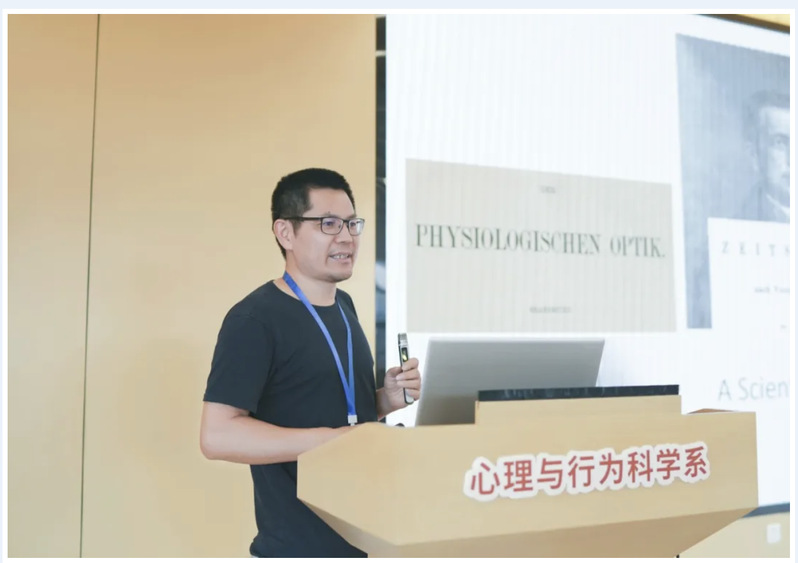
Professor Zhuanghua Shi from the University of Munich's Faculty of Psychology provided an insightful explanation of the influence of prior knowledge on the perceptual process. He pointed out that incorporating trial-updated information into models helps predict participants' response behaviors more accurately. Building on this, he proposed a two-stage model based on a unified dynamic Bayesian framework, emphasizing the joint role of prior experience and current trial information in perceptual decision-making, thus offering a new theoretical perspective for understanding human perception and cognitive mechanisms.
Yuzheng Hu Assistant Head and Tenured Associate Professor of the Zhejiang University Department of Psychology and Behavioral Sciences, presented a report on the neural mechanisms of addiction. He explained the imbalance between the brain's drive system and control system, provided an in-depth analysis of the functional changes in the anterior cingulate cortex and dorsolateral prefrontal cortex in addictive behaviors, and emphasized the critical roles of these two brain regions in addiction intervention and treatment.
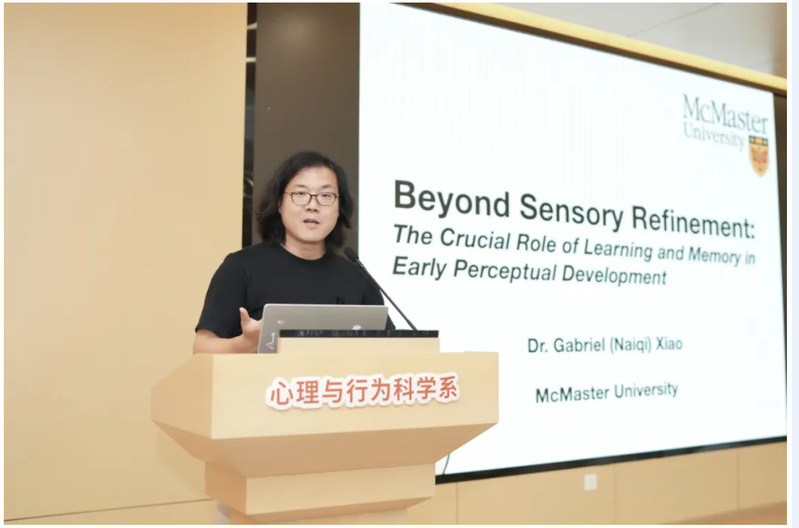
Naiqi Xiao , Assistant Professor at McMaster University, Canada, shared insights into the key roles of learning and memory in early perceptual development. He suggested that the current understanding of infant cognitive development might still be somewhat fragmented and proposed that future research urgently needs to construct a more systematic and integrated theoretical framework to comprehensively reveal the mechanisms of cognitive development.
Image
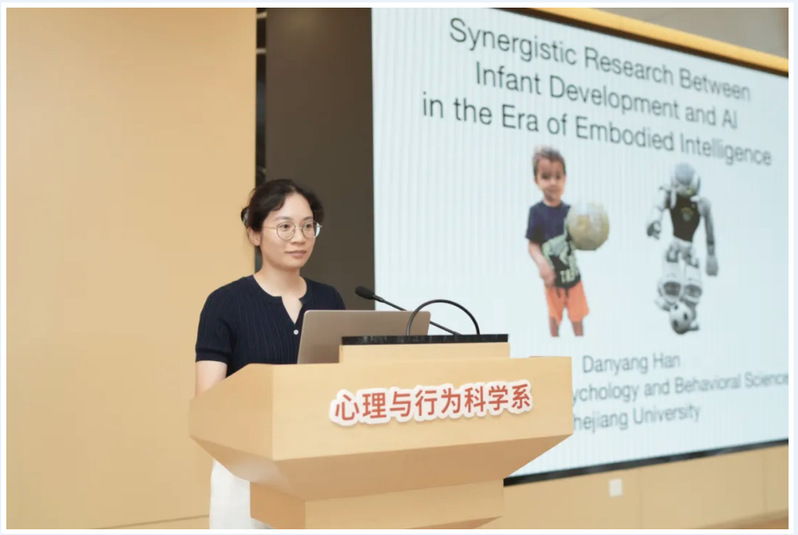
Danyang Han, a Hundred Talents Program Research Fellow at the Zhejiang University Department of Psychology and Behavioral Sciences, focused on the bidirectional inspiration between infant research and artificial intelligence. Drawing inspiration from the mechanisms of infant learning processes, she has designed AI systems that learn faster and perform better. Simultaneously, leveraging cutting-edge technologies like computer vision and machine learning, she has developed analysis systems capable of quantifying infant behavior, providing more refined data support for infant cognitive research and expanding the technical pathways for the integration of developmental psychology and AI.
This forum closely revolved around the core theme of Interdisciplinary Research and Health Applications of Neuroscience and Artificial Intelligence, focusing on cutting-edge research, sharing the latest findings, and exploring innovative integration pathways. The forum not only provided interdisciplinary theoretical support and practical insights for mental health in the intelligent era but also injected new momentum into promoting the deep integration of neuroscience and artificial intelligence.