

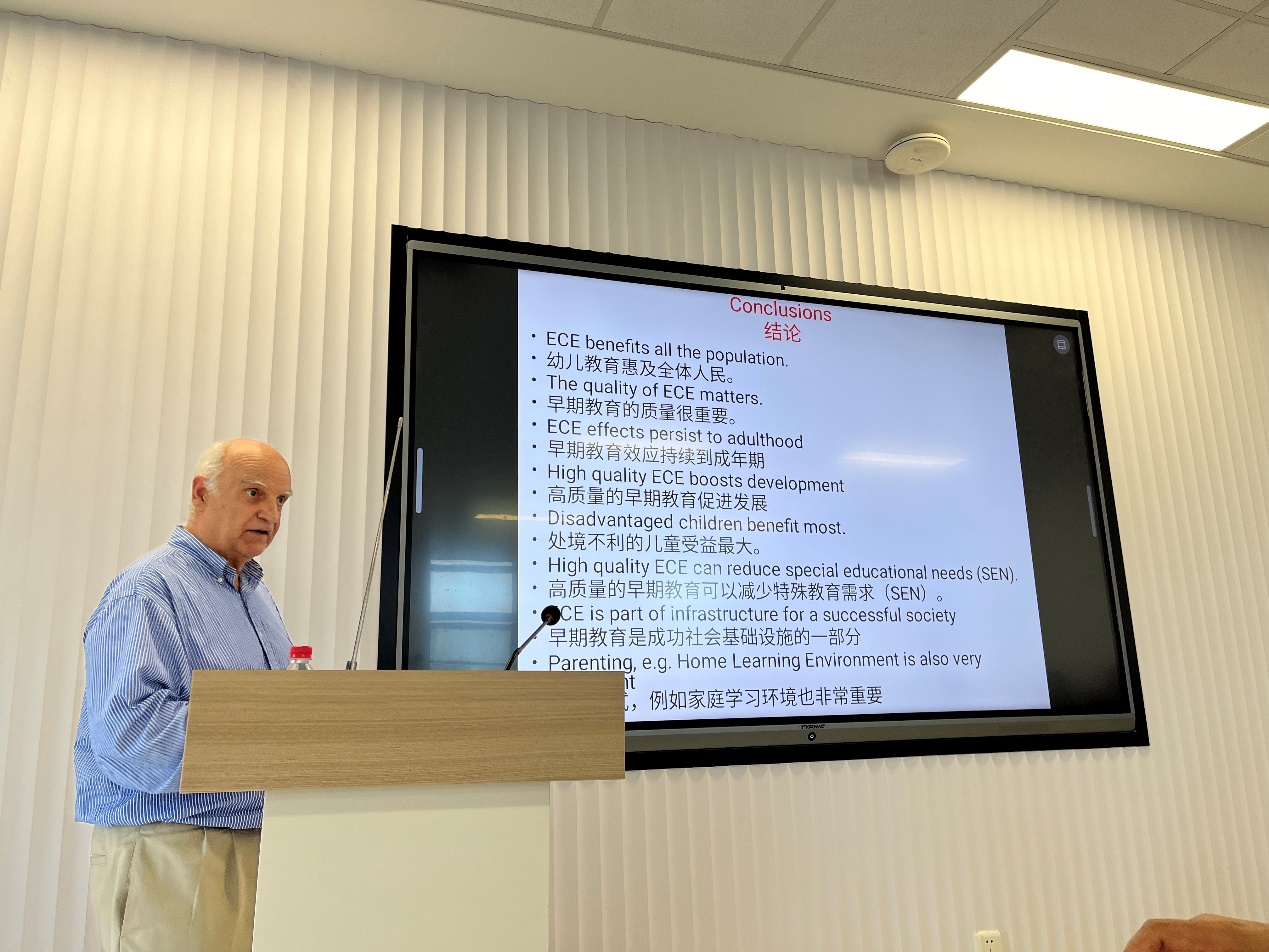
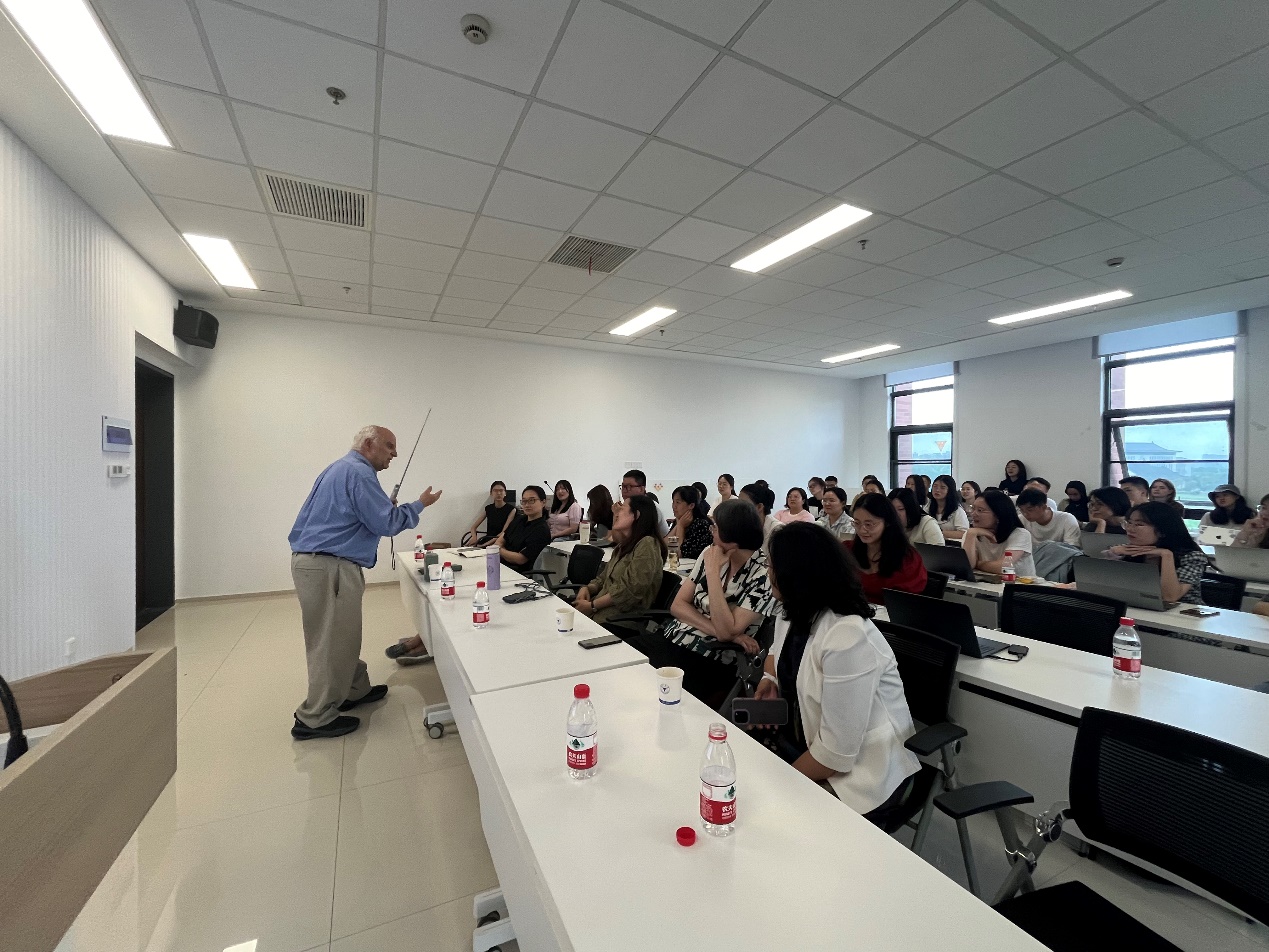
On the afternoon of June 20th, the Chen Li Frontiers in Psychological Science Lecture Series, hosted by the Department of Psychology and Behavioral Science of Zhejiang University, was successfully held in Lecture Hall 417, Building 3, Hainayuan, Zijingang Campus. The event featured Professor Edward Melhuish, Professor of Human Development at the University of Oxford, Officer of the Order of the British Empire (OBE), Fellow of the Academy of Social Sciences, and Zhejiang University Pao Yu-Kong Chair Professor, who shared his research in the fields of early childhood development and human brain development. Professor Edward is a highly cited scholar ranked within the global top 2% in preschool child development and education, with an h-index of 67 and an i-10 index of 201. His work primarily focuses on children's cognitive, social, educational, and language development, particularly examining environmental influences on children through longitudinal studies. His research has informed UK legislation including the Children Act 1989, Children Act 2004, Childcare Act 2006, and recent legislation on preschool education. The lecture was chaired by Professor Jie He from the Department of Psychology.
During the lecture, Professor Edward elaborated on the importance of preschool education, the patterns of human brain development, and preschool education policies across various countries, systematically explaining the impact of early educational experiences on long-term individual and national development. Professor Edward emphasized that the human brain develops rapidly and exhibits high plasticity in early life, showing remarkable development in sensory pathways, language acquisition, and higher cognitive functions. Among these, children's language development is particularly crucial. Language serves as a key foundation for education, reading, and mathematics, and is central to educational practice and policy. Factors such as family economic status, parental education level, and the home learning environment can influence children's language development, thereby affecting their educational performance. Additionally, Professor Edward highlighted that early self-regulation in children also impacts long-term development. Therefore, effective preschool education should be child-centered, emphasizing the quality of verbal interactions between adults and children, prioritizing children's understanding of curricular knowledge, understanding how children learn, supporting children in problem-solving, and fostering home learning.
Furthermore, Professor Edward introduced the audience to preschool education policies in various countries. For example, the UK government provides free education for children from low-income families, while countries like Norway, France, and Switzerland began offering free preschool education as early as the 19th century to increase enrollment rates.
Professor Edward's lecture was well-structured, engaging, and humorous, featuring several interesting interactions with the faculty and students. Attendees further exchanged views with him on how to help parents learn parenting knowledge and apply it in practice. This lecture provided participants with a enriched understanding of early childhood education and care, schooling, parent-child relationships, as well as the long-term effects of early experiences, child poverty, social exclusion, and their policy implications for education and social development.